Testosterone Replacement Therapy (TRT)
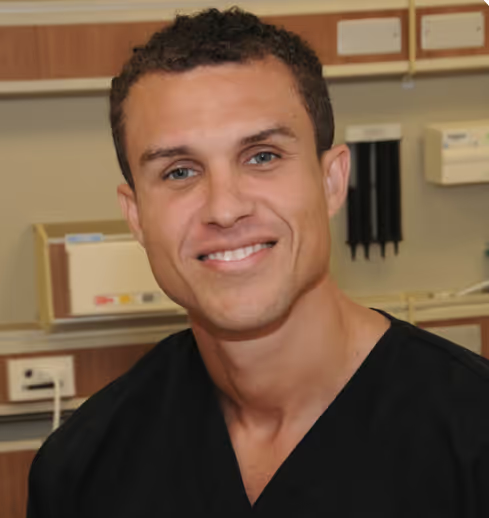
Testosterone replacement therapy restores testosterone to a healthy physiological range in men whose own production has genuinely fallen too low. At AmpUp Wellness, every TRT programme is built on two early-morning lab panels, prescribed and supervised by David Patterson, APRN, and adjusted in person over time — not issued from an online questionnaire.
Below is exactly how the therapy works: who qualifies, what we measure, how it is delivered, what changes and when, and how we monitor you for safety.

Signs Worth Measuring
Any one of these has many possible causes. Several together, in a man over 35, is worth a blood test.
Persistent fatigue
Tiredness that a full night's sleep does not resolve, and that has not shifted for months.
Strength and muscle loss
Muscle mass slipping and lifts going backwards despite training that has not changed.
Weight around the midsection
Fat gathering centrally and resisting the diet and exercise that used to work.
Low libido or erectile quality
A clear drop from your own baseline, rather than an occasional off week.
Flat mood and motivation
Low drive, irritability and a sense of being blunted rather than actively depressed.
Brain fog and poor sleep
Difficulty concentrating, and sleep that is broken or no longer restorative.
Recognise several of these? A morning testosterone panel is the only way to know. Book a consultation.
And Who It Is Not For
We do not start testosterone in men who are actively trying to conceive, because exogenous testosterone suppresses the body's own sperm production. We also hold off in men with an untreated elevated haematocrit, untreated obstructive sleep apnoea, or a cardiovascular event within the last three to six months.
If your symptoms turn out to be driven by thyroid dysfunction, poor sleep, or another hormone entirely, we will tell you that rather than write a prescription — and our broader hormone replacement therapy programme may be the better fit. If you want the longer read first, our article on low testosterone after 40 walks through the symptom picture in more detail.
Still working out whether hormones are the issue at all? Our post on signs you need hormone replacement therapy is a good starting point before you book.
Injections or Pellets
AmpUp offers both. They suit different people, and most patients establish the right dose on injections first.
Injections
- Cadence: weekly or twice-weekly
- Where: self-administered at home after we teach the technique
- Levels: comparatively steady — avoids the peak-and-crash of older three-weekly protocols
- Adjustment: dose can be changed week to week, so it is the easiest method to fine-tune
- Cost shape: lower recurring cost
Pellets
- Cadence: one in-office procedure every three to five months
- Where: implanted under the skin of the hip
- Levels: gradual, sustained release
- Adjustment: fixed once implanted — the dose cannot change until it wears off
- Cost shape: higher per procedure, spread across months
Not sure which fits? That is a conversation for your consultation, once we can see your labs. Book a consultation.
TRT also combines well with other therapies. Men pursuing recovery, sleep quality and body composition alongside hormone optimisation often run peptide therapy in parallel — and we will tell you plainly if the two are not worth stacking in your case.
What Changes, and When
Testosterone does not work overnight, and any clinic that tells you otherwise is selling something. Here is the realistic sequence, based on what our patients report and what the evidence supports.
The first six weeks
- Weeks 1–2: sleep quality and morning energy are usually the first things to shift. Some men notice mood and mental clarity lifting in this window too.
- Weeks 3–4: libido and sexual function typically begin to improve. Motivation and drive often follow.
- Weeks 5–6: first follow-up labs. Energy gains tend to consolidate rather than keep climbing, and we confirm your level has landed where we intended.
Three to six months and beyond
- Month 3: body composition starts to move — lean mass up, fat mass down — assuming training and nutrition are in place.
- Month 6: strength gains, insulin sensitivity and bone-density benefits are established. Most men are on a stable dose by now.
- Beyond: benefits are maintained, not compounded. TRT is ongoing therapy, and stopping returns you to baseline over several months.
Because the month-three changes are compositional rather than scale-weight changes, we track them with an InBody body composition scan rather than a bathroom scale. Watching lean mass rise while fat mass falls is the clearest evidence a protocol is working — and it is something a telehealth prescription cannot give you.
What Testosterone Replacement Therapy Costs
TRT is not a single-price product, because the labs, the delivery method and the dose all vary by patient. Rather than publish a headline figure that turns out not to apply to you, we price transparently at the point where we actually know what you need.
Your programme starts with a consultation and a baseline hormone and safety panel. Once those results are in, APRN David Patterson will walk you through the recommended protocol and the full monthly cost — medication, supplies and follow-up labs included — before you commit to anything. There is no obligation to proceed after the consultation, and we will tell you if we do not think TRT is the right answer for your symptoms.
Two things worth knowing up front. First, pricing differs between injections and pellets: injections carry a lower recurring cost, pellets carry a higher per-procedure cost spread across three to five months. Second, ongoing monitoring bloodwork is part of the therapy, not an optional extra — any quote that omits it is not a complete quote.
For a sense of how we structure hormone pricing generally, our guide to hormone replacement therapy cost covers the same ground for our broader BHRT programmes. And if you are weighing local providers rather than the therapy itself, see our page on low testosterone treatment in Delray Beach.
Testosterone Replacement Therapy: Frequently Asked Questions
What is testosterone replacement therapy?
What are the signs of low testosterone?
How is testosterone therapy administered?
How long before I feel a difference on TRT?
What labs are required before starting TRT?
Is testosterone replacement therapy safe long-term?
Will TRT affect fertility?
Can I combine TRT with peptide therapy?
Book a Testosterone Consultation
Rated 5/5 on Google by Delray Beach Patients
"I can’t say enough good things about this company. All my friends are asking where I get the energy from or how are you still so fit in your 50’s!! One simple answer David at Amped up wellness. I feel like a 16 year old again. No more afternoon naps, I am motivated to get stuff done and feel more upbeat and positive. Thank you David!!!"
“David is an exceptional practitioner/Doctor—knowledgeable, kind, and genuinely invested in his patients’ well-being. His expertise in TRT (Testosterone Replacement Therapy) is evident, and he’s always available to answer questions or provide guidance. I feel supported and confident under his care. Highly recommended for anyone seeking a thoughtful and professional approach to treatment.”
“David is incredibly knowledgeable and takes pride in his work. He's professional and performs the highest quality of care! With every question I asked, he truly took his time to listen and came up with a plan catered specifically to my needs. Will definitely be seeing him again.”