Red Light Therapy in Delray Beach and Boca Raton
AmpUp Wellness runs a full-body red light therapy bed at our clinic on Linton Boulevard in Delray Beach, fifteen minutes from central Boca Raton and ten from Boynton Beach. You lie down, the whole body is treated in one session rather than one panel-sized area at a time, and you walk out and carry on with your day.
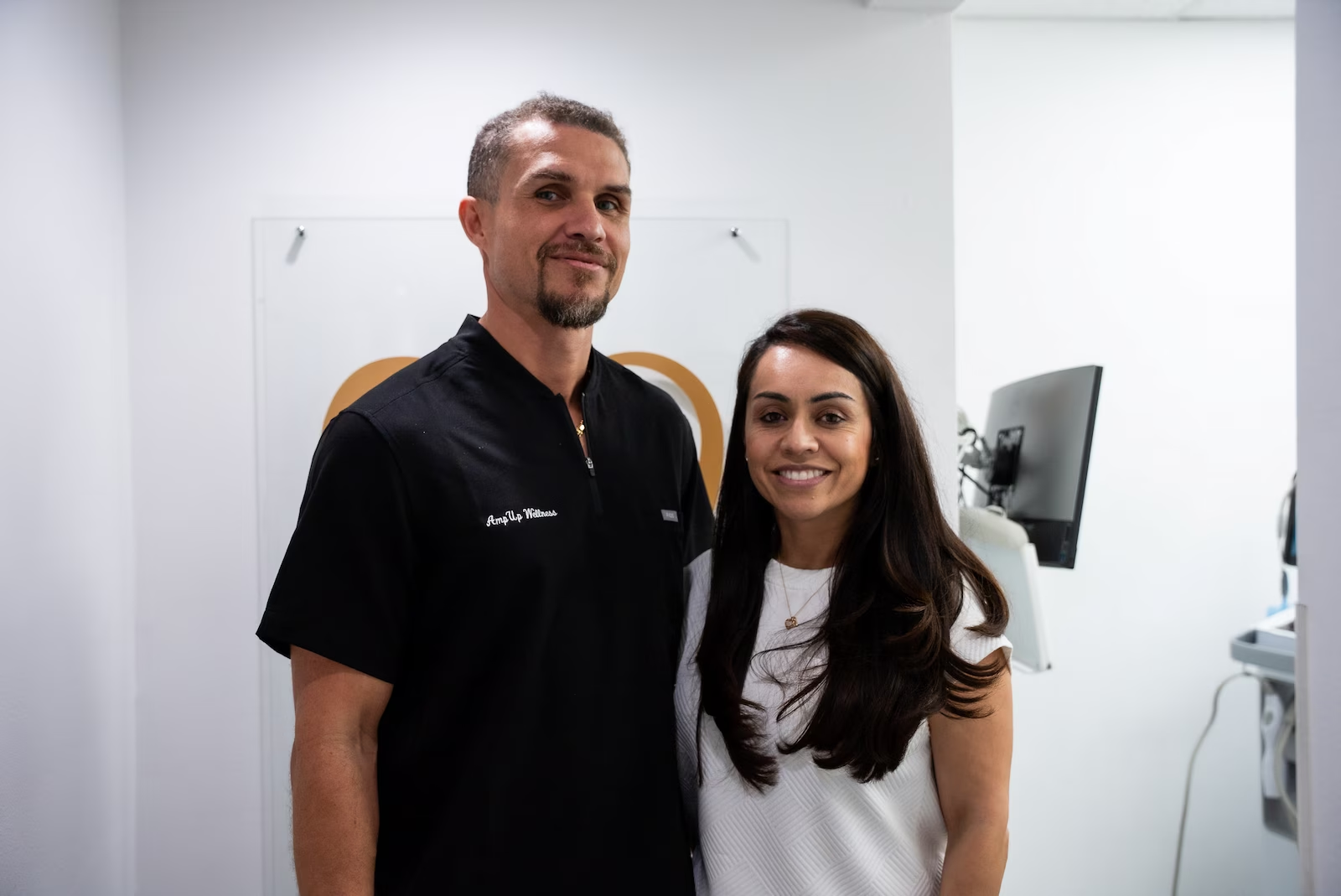
Sessions are supervised by David Patterson, APRN. Below you will find what the light actually does, what the evidence supports and what it does not, what a visit involves, and who should avoid it.
What the Light Is Doing
Two wavelength ranges, doing two different jobs at two different depths.
Red Light
Roughly 600 to 680 nanometres. Absorbed at and just below the skin surface, which is why the skin-related evidence — collagen, tone, texture — sits mostly with this range.
Near-Infrared
Roughly 800 to 850 nanometres. Invisible to the eye and penetrates further, reaching muscle and joint tissue. This is the range most relevant to recovery and joint discomfort.
Why Dose Matters
More is not better. Both too little and too much light reduce the effect, which is a large part of why study results vary so widely and why session length is not something to improvise.
What It Is Not
Not ultraviolet, so it does not tan or burn. Not a heat lamp — the warmth is incidental. And not a laser treatment, which is a different category of device entirely.
Curious whether it applies to what you are dealing with? Book a consultation.
What the Evidence Supports, and What It Does Not
Red light therapy is marketed harder than the evidence behind it, and you can find a clinic within ten miles of here claiming it does almost anything. We would rather set out where things actually stand, because you are going to spend money on this and you should know what you are buying.
Where the evidence is strongest. Skin quality and collagen, musculoskeletal pain including knee osteoarthritis, and muscle recovery and soreness after training are the areas with the most supportive human trial data. These are the reasons most of our patients come in, and they are the reasons we would suggest trying it.
Where it is thinner than the marketing suggests. Reviews of the wider literature are consistent on one point: there is not yet enough evidence to recommend these devices for any one specific condition with confidence. Studies vary widely in wavelength, dose, session length and how outcomes were measured, which makes results hard to compare. Weight loss in particular is claimed constantly online and is not something we will tell you red light does.
On the technology. Red light in roughly the 600 to 680 nanometre range is absorbed at the skin. Near-infrared, around 800 to 850 nanometres, penetrates further into muscle and joint tissue. The working theory is that mitochondria absorb this light and produce cellular energy more efficiently. That mechanism is plausible and widely cited, but it is still a working theory rather than settled fact.
On FDA status. Devices in this category go through 510(k) clearance, not FDA approval. Clearance means a device was shown to be substantially equivalent to something already on the market — a considerably lower bar than approval. Any clinic advertising a light device as FDA approved is overstating what that means.
If you want the full picture rather than the summary, our review of what the science actually shows works through the individual studies.
Cost, and Who Should Not Use It
Two things worth knowing before you book rather than after.
What It Costs
- Sessions are sold individually and in multi-session packages, since almost nobody comes once.
- No membership and no minimum commitment. You are not locked into a course to try it.
- Current per-session and package pricing is confirmed by phone on (561) 850-5983 or at your first visit.
- We would rather you booked two or three and decided for yourself than bought a twelve-session package on day one.
When We Would Say No
- An existing eye condition, or any history of retinal disease — tell us before booking, not on the day.
- Medications that increase light sensitivity, including some antibiotics, retinoids and diuretics.
- Active skin cancer or an undiagnosed lesion in the area being treated.
- Pregnancy, where we take a cautious line simply because the safety data is thin.
- Patients with darker skin tones should raise it with us first, as the published guidance recommends a dermatology conversation.
Not sure whether it is worth trying? Book a consultation and we will give you a straight answer.
Coming From Boca Raton or Boynton Beach
The clinic sits on Linton Boulevard in Delray Beach, which puts it roughly fifteen minutes from central Boca Raton and ten from Boynton Beach. Parking is free and directly outside the suite, which matters more than it sounds when a session only takes a few minutes and you are fitting it around work.
Most red light providers in Boca Raton run panels rather than a full-body bed, which is the main reason patients make the short drive north. If you are weighing it up, our Boca Raton page covers everything we offer patients travelling from there, and the Boynton Beach page does the same.
For the wider evidence picture rather than the local logistics, our longer review of what the science actually shows on red light therapy goes considerably deeper than this page does.
Frequently Asked Questions
Is there a red light therapy bed near Boca Raton?
What is the difference between a bed and a panel?
How many sessions before I notice anything?
How often should I come in?
Is it the same as a tanning bed?
Is red light therapy FDA approved?
Do I need eye protection?
Can I combine it with other treatments?
Do you serve Boynton Beach and Highland Beach?
Book Red Light Therapy
Rated 5/5 on Google by Delray Beach Patients
“David helped me lose weight that I have been carrying around for years. I have energy again to keep up with my wife and kids. Real life changer!”
“Had the best experience at AmpUp Wellness. David was very informative and explained all of the options available. I’ve been feeling great and energized since my IV treatment.”
“David is exceptionally caring, compassionate, and knowledgeable. His treatment plans are thorough and truly effective. I finally feel like myself again.”

Serving Delray Beach and Beyond